How do sea otters stay warm in cold seas?

 First, let me give you the answer in 30 seconds.
Sea otters do not have a thick layer of fat like seals and whales do. Instead, they trap air in their fur, the densest of any animal, which keeps the cold seawater from reaching their skin. On top of that, they eat food equal to about 1/4 of their body weight every day and burn it to make heat inside their bodies.
Sea otters have no thick fat
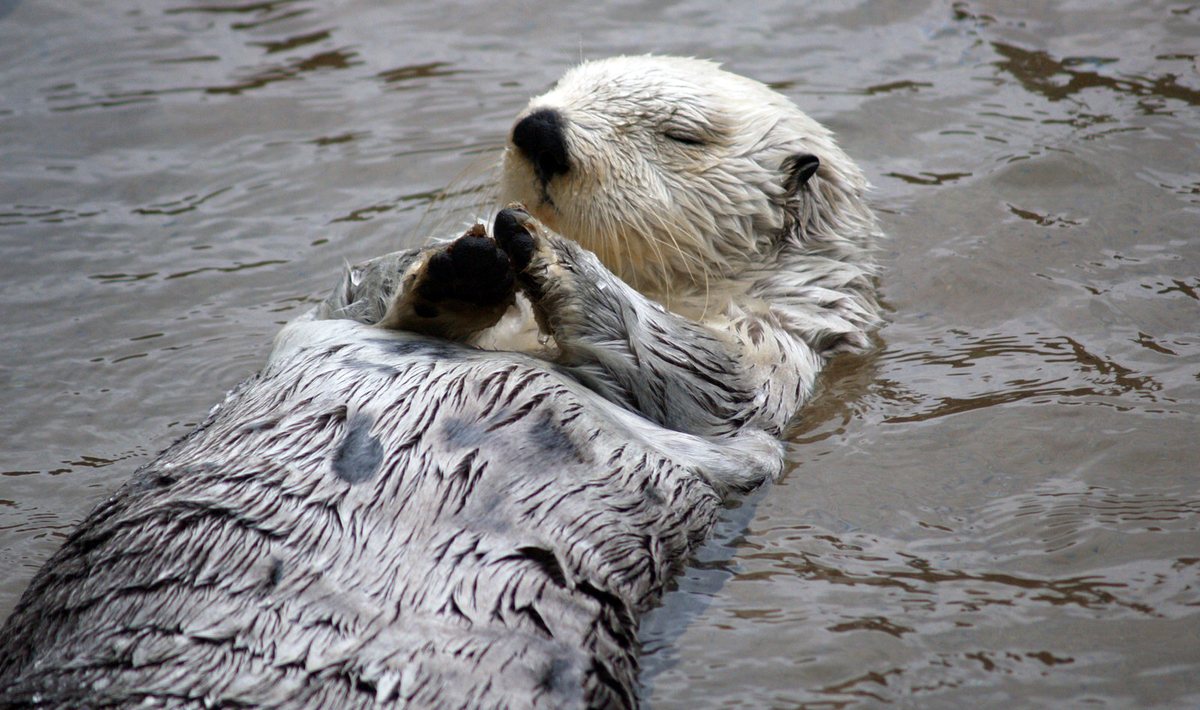
Seals, whales and other animals that live in cold seas protect their body heat with a thick layer of fat (blubber) under the skin. But even though sea otters are also sea mammals, they do not have this thick layer of fat. Instead, their body is kept warm by special fur and by a body that makes heat by eating a lot.
The densest fur of any animal
Sea otter fur is said to be the densest of any animal. In the thickest places, more than 1 million hairs grow in an area of 1 square inch (about 2.5 cm by 2.5 cm). A person has only about 100,000 hairs or fewer on their whole head, so you can see how tightly packed sea otter fur is. The fur has 2 layers: a soft underfur and longer hairs that grow sparsely on top of it.
Grooming makes a layer of air
This fur can keep the body warm because it traps air between the hairs. Sea otters spend many hours a day grooming. They spread oil from their skin through their fur and fluff it up so that it holds tiny air bubbles. This layer of air sits between the cold seawater and the skin and helps keep heat from escaping. If the fur gets dirty, it cannot keep them warm, so they need to keep it clean all the time.
The numbers are the same as in the article, based on explanations from the U.S. National Park Service and aquariums.

Eating a lot to make heat
Their other trick is eating a lot. Sea otters have a very active metabolism, the process of making energy from food, and they burn food like fuel to produce heat. Observations of sea otters in aquariums show that they eat about 1/4 (about 25%) of their body weight each day. In this way, they keep their average body temperature at about 38℃.
Want to know more?
- One set of observations found that sea otters spend 11–48% of their time grooming.
- The fur on a sea otter's head turns grayish white as it gets older, which has earned it the nickname "old man of the sea" in English.
- Newborn pups cannot swim or take care of their own fur, so they need constant care.

Quick quiz: test yourself
How do sea otters keep warm in cold seas?
Show the answer
- With a thick layer of fat
- By living only in warm currents
- By trapping air in dense fur
By trapping air in dense fur Sea otters have no thick fat layer. They trap air in their fur, the densest of any animal, and eat a lot to make heat inside their bodies.
Sea otters have no thick fat layer. They trap air in their fur, the densest of any animal, and eat a lot to make heat inside their bodies.
Next quiz ›Sources
- Sea OtterNational Park Service(アメリカ国立公園局、ケナイ・フィヨルド国立公園)
- Sea otterMonterey Bay Aquarium(モントレーベイ水族館)
- The densest fur of any animal on earth: all about sea ottersSeattle Aquarium(シアトル水族館)
- The Sea Otter's Guide to SkincareScience World(サイエンス・ワールド、バンクーバーの科学館)
This article was written after checking the sources above as of 2026-10-03. Explanations may change as research progresses. Photo credits are shown below each photo.