Why don't humans have tails?

 In fact, before we were born, even we humans had a tail.
The ancestors of humans and apes such as chimpanzees are thought to have lost their tails about 25 million years ago. A 2024 study suggested that a "jumping" piece of DNA landing inside a gene involved in building the tail may have been one of the triggers for losing it.
A tail before birth
In fact, all mammals have a tail at some point while growing in the womb. Humans are no exception: a baby in the womb has a tail, but it disappears at about 8 weeks. Still, a reminder of it remains inside the body as the tailbone (coccyx) at the very bottom of the spine.
A tail lost about 25 million years ago
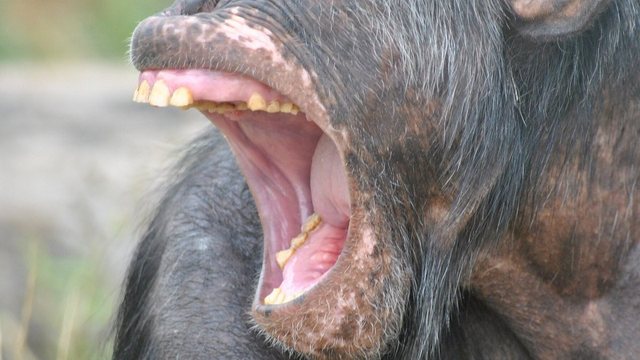
Humans are not the only ones without tails. Apes such as chimpanzees and gorillas have no visible tail either. According to the study, the tail is thought to have been lost around 25 million years ago, when the ancestors of humans and apes split off from the group of monkeys called Old World monkeys. Today, the human tailbone is made of 3 to 5 small bones.

The clue: a jumping piece of DNA
In 2024, a research team in the United States focused on a gene called TBXT, which is involved in building the tail. In the ancestors of apes, a piece of DNA called an Alu element, which can move around within the genome (all of an organism's genetic information), had landed inside this gene. This changed the way the gene is read, so a version with a part missing could also be made. When the researchers created a similar situation in mice, the mice had no tail or a shortened tail.
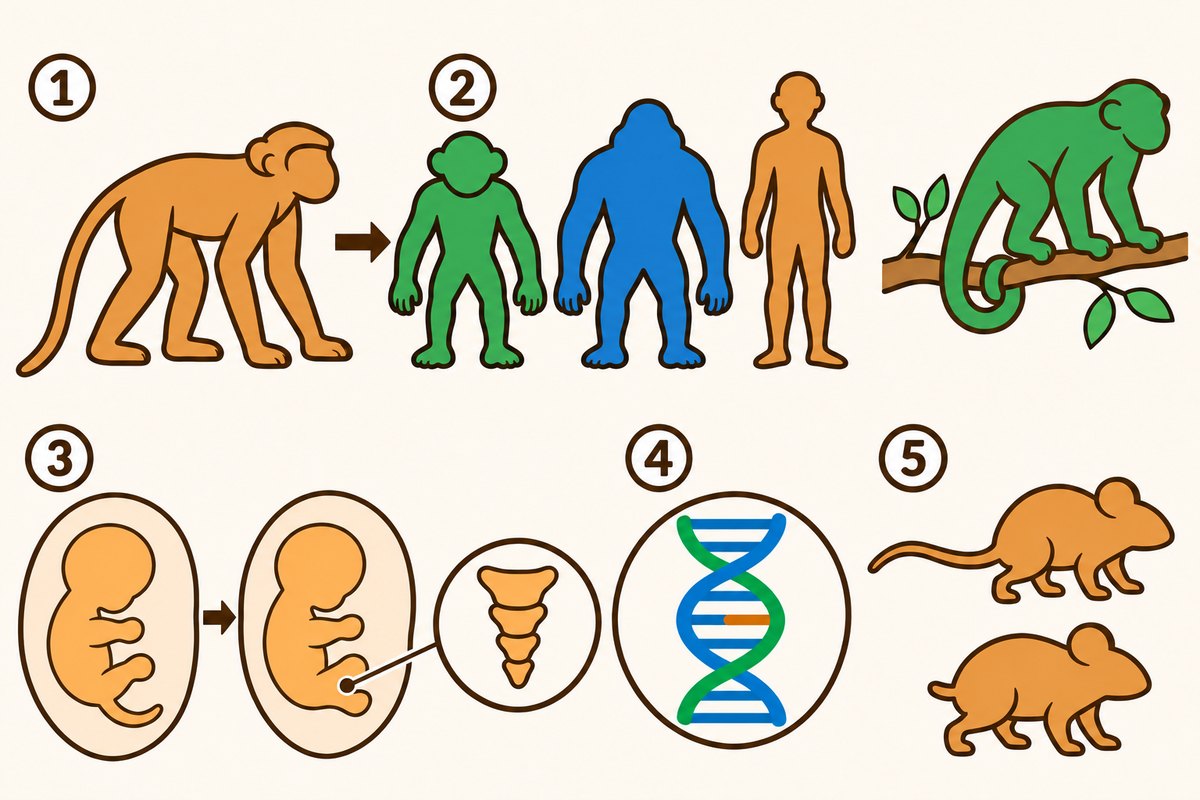
- 1A monkey with a tail
- 2Tailless apes (chimpanzee, gorilla) and a human
- 3The small tail of a baby in the womb, and the tailbone left at the base of the spine
- 4A piece of mobile DNA inserted in a gene
- 5Mouse experiment: a normal mouse and a mouse with a shorter tail
Was losing the tail an advantage?
It has long been suggested that losing the tail was linked to humans standing upright and walking on two legs. But why losing the tail was an advantage is still not clear. The new study also only showed, from experiments in mice and other evidence, that this change "may have been one of the triggers." It does not explain everything on its own.
Want to know more?
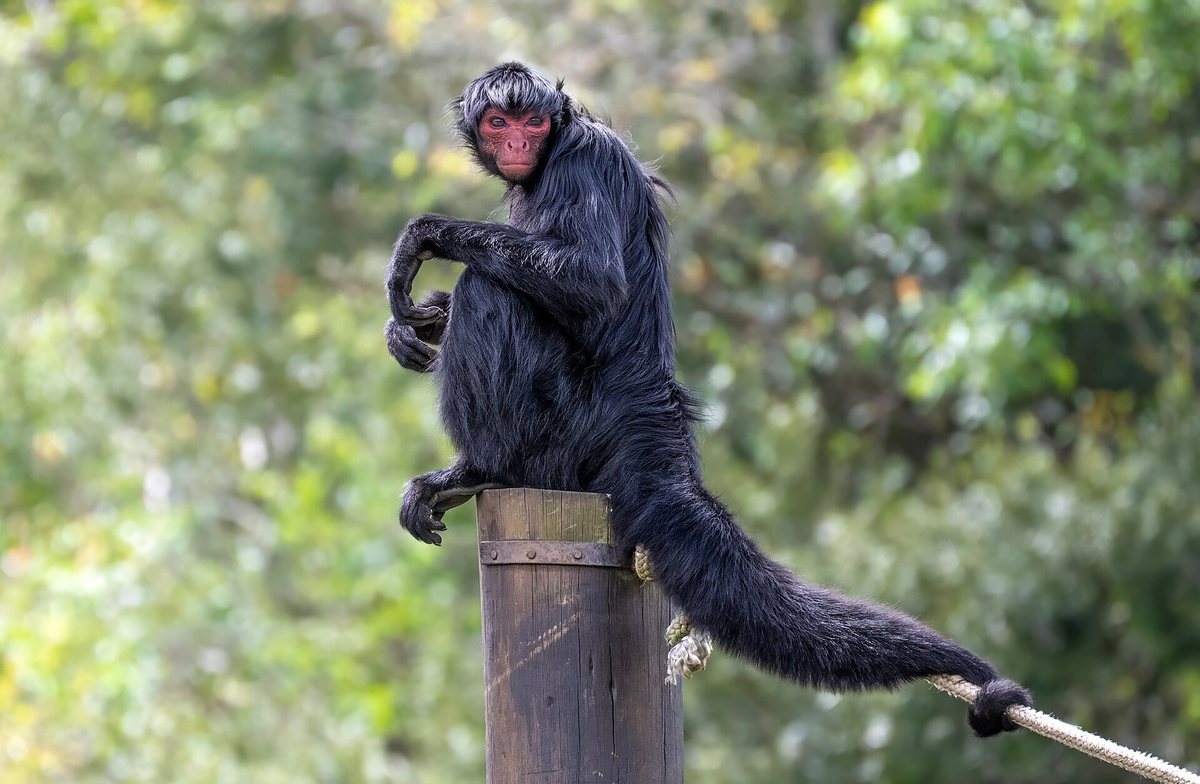
- Howler monkeys in Central and South America have tails that can grip things, which helps them live in the trees.
- A mouse research database lists more than 100 genes linked to having no tail or a short tail.
- In the study, some mice given the tail-shortening version of the gene also had a problem where the tube of nerves in the spine did not close properly, so the researchers suggest losing the tail may have come with a cost.
Quick quiz: test yourself
Remember what you just read? Give it a try!Which bone inside the body is what remains of the human tail?
Show the answer
- The tailbone
- The collarbone
- The kneecap
The tailbone The tail of a baby in the womb disappears at about 8 weeks, but a reminder of it remains as the tailbone at the bottom of the spine.
The tail of a baby in the womb disappears at about 8 weeks, but a reminder of it remains as the tailbone at the bottom of the spine.
Next quiz ›Sources
- On the genetic basis of tail-loss evolution in humans and apesNature(PMC 掲載の査読論文)
- A mobile DNA sequence could explain tail loss in humans and apesNature News & Views
This article was written after checking the sources above as of 2026-10-03. Explanations may change as research progresses. Photo credits are shown below each photo.
Next fun fact ▶
 Human BodyWhy do I get sleepy after eating?After lunch, your eyelids start to feel heavy... What is happening inside your body?

40 surprising animal facts with big photos and short, easy text. A fun-facts book for kids and grown-ups to read together.
See it on Amazon