Why do optical illusions trick our brains?

 The keys are the brain's "shortcuts" and the tiniest movements of our eyes.
Optical illusions happen because the brain takes shortcuts to judge what we see quickly. In illusions like the "Rotating Snakes," where a still picture seems to move, a pattern of colors with different brightness combines with tiny eye movements and blinks while we look, and this is thought to set off the brain's motion sensing.
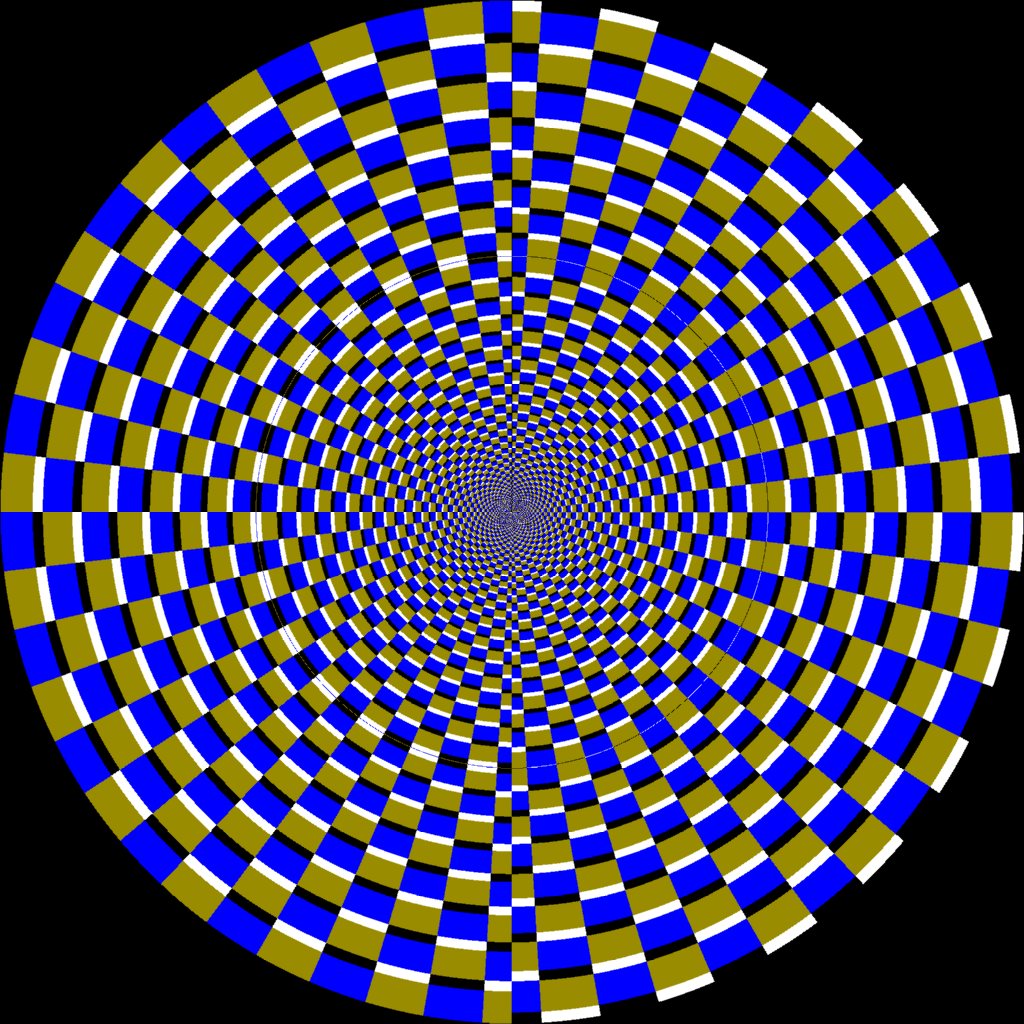
The brain takes shortcuts
When we look at something, the light entering our eyes is turned into electrical signals, and the brain puts them together into shapes and colors. According to Inside Science from the American Institute of Physics, this takes about 0.1 seconds, and a huge amount of information keeps pouring into our eyes. So the brain takes shortcuts, simplifying what we see so we can focus on what matters. Optical illusions are pictures that cleverly exploit these shortcuts. The Moon looking bigger near the horizon is one such illusion too.
"Snakes" that spin while standing still
A famous illusion where a still picture seems to move is the "Rotating Snakes," published in 2005 by Professor Akiyoshi Kitaoka of Ritsumeikan University in Japan. Four colors with different brightness are lined up in a regular pattern around circles, and to most people they seem to spin in the direction black, blue, white, yellow. Similar illusions go back to one published in 1979 and have been improved over the years.

Brightness reaches the brain at different speeds
One possible reason is that different levels of brightness reach the brain at different speeds. The brain is said to sense light colors faster than dark ones, and one idea is that this lag makes the brain's "motion-sensing cells" treat the still pattern of colors just as if it were really moving.
Tiny eye movements act as a switch
In 2012, a research team in the United States recorded people's eye movements in fine detail while asking them whether the picture seemed to spin. They found that the spinning was more likely right after tiny jumps of the eye (microsaccades), which happen even when we stare at one point, and after blinks. However, researchers still disagree about which eye movements matter most.
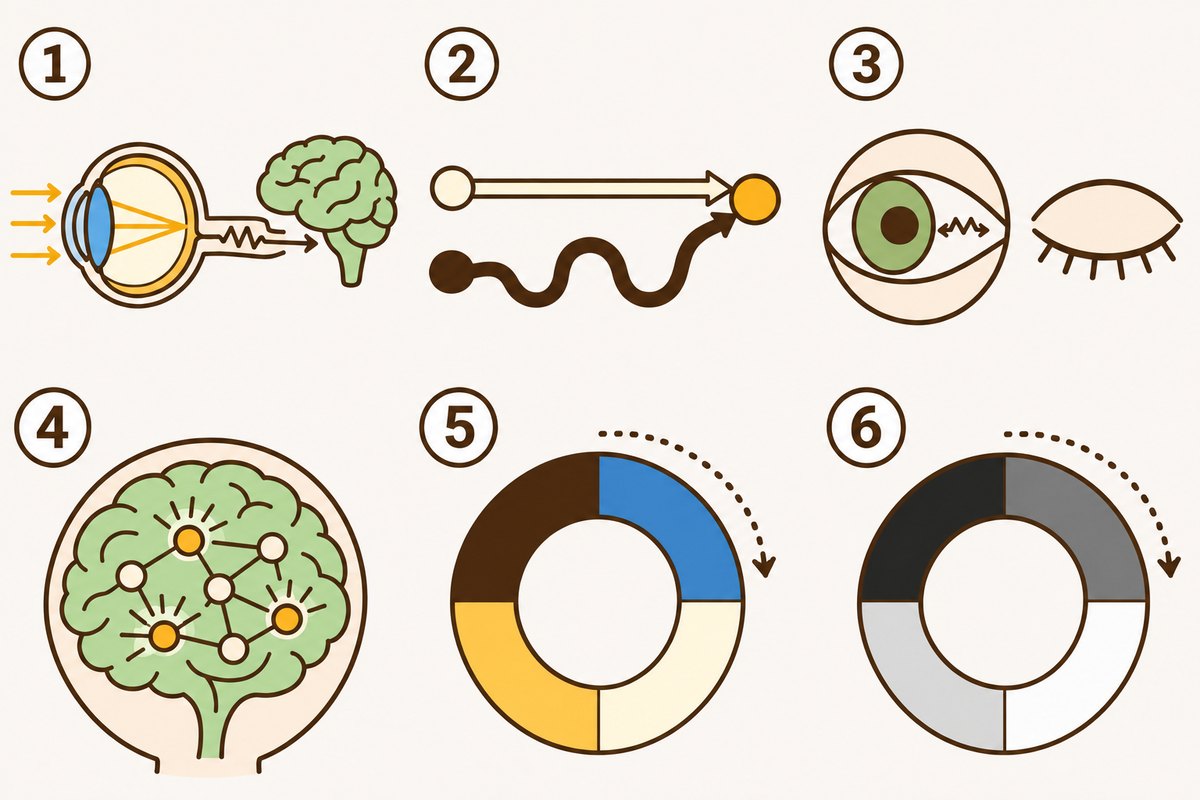
- 1Light entering the eye becomes a signal and travels to the brain
- 2Bright colors reach the brain faster than dark ones
- 3Even when you stare at one point, your eyes make small movements and you blink
- 4Brain cells that sense motion respond
- 5A row of colors with different brightness seems to rotate
- 6It seems to rotate even in black and white
Want to know more?
- Even when we think we are staring at one point, our eyes keep making movements so small that we do not notice them.
- The Rotating Snakes still seem to spin in black and white as long as the brightness relationships are kept, and they have been shown to activate motion-sensitive cells in the brain.
- Some illusions make us see differences in shading that are not really there, rather than motion.
Quick quiz: test yourself
Remember what you just read? Give it a try!What did a 2012 study find makes the Rotating Snakes more likely to seem to spin?
Show the answer
- Blinks and tiny eye movements
- The temperature of the room
- The time of day
Blinks and tiny eye movements The spinning was more likely right after tiny jumps of the eye (microsaccades), which happen even when we stare at one point, and after blinks.
The spinning was more likely right after tiny jumps of the eye (microsaccades), which happen even when we stare at one point, and after blinks.
Next quiz ›Sources
- How Do Optical Illusions Work?AIP(アメリカ物理学協会)Inside Science
- Microsaccades and Blinks Trigger Illusory Rotation in the "Rotating Snakes" IllusionThe Journal of Neuroscience(PMC 掲載の査読論文)
- Image of the Week: Snakes on a BrainBrainFacts.org(北米神経科学学会)
This article was written after checking the sources above as of 2026-10-03. Explanations may change as research progresses. Photo credits are shown below each photo.
Next fun fact ▶
 Human BodyWhy don't humans have tails?Monkeys have tails, but humans don't. When and why did ours disappear?

40 surprising animal facts with big photos and short, easy text. A fun-facts book for kids and grown-ups to read together.
See it on Amazon