Why is wombat poop cube-shaped?

 The key to the mystery is not the bottom, but the wall of the intestine.
Wombat poop becomes cube-shaped in the last part of the intestine. The intestine wall has stiff parts and soft parts, and when the intestine squeezes they move at different speeds, which is thought to make the corners. Wombats leave the cubes on places like rocks, where they are said to work as territory markers.
Poop like dice
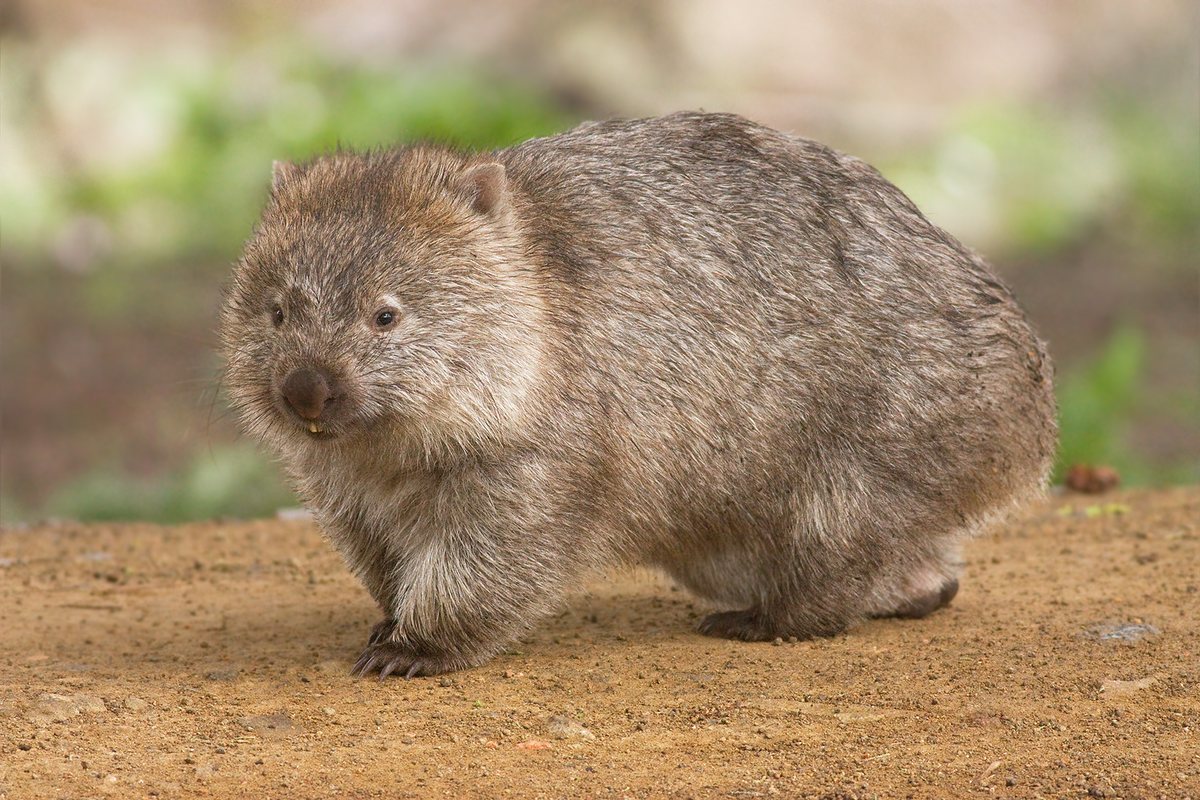
Wombats, which live in Australia, are famous for pooping cubes that look like dice. Most animals make long, rounded poop, but according to a 2021 paper, wombats are the only animals that make neat, cube-shaped poop. The poop of the well-studied common wombat is about 2.3 cm high, 2.5 cm wide and 4 cm long, and a wombat makes about 80 to 100 of them a day.
It is not the bottom's shape
People once guessed that wombats might have a square bottom opening, but no one had checked. When researchers looked inside a wombat with a CT scan (a kind of scan that shows the inside of the body), the opening was round, just like in other animals. By studying wombat bodies, they found that the cube shape forms in the last 17% or so of the 6 to 9 m long intestine. In this part, the poop loses water and gets firm.
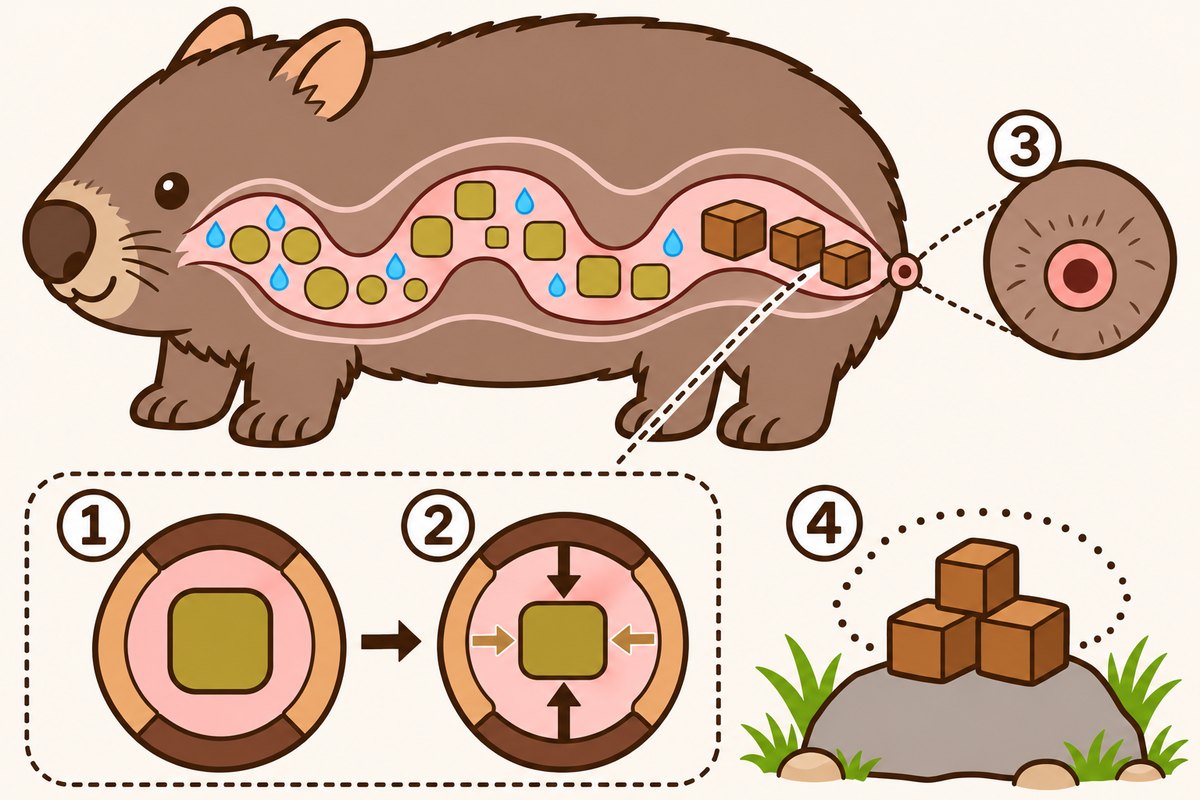
- 1A slice of the last part of the gut: stiff and soft sections of wall alternate
- 2When the gut squeezes, the stiff parts move fast and the soft parts move slowly
- 3The opening at the rear is round, just like other animals'
- 4Cube-shaped droppings left on a prominent rock to mark territory
Stiff and soft parts in the intestine wall
When the researchers looked at slices of the intestine, they found that parts of the wall were about 2 times thicker and about 4 times stiffer than the rest. They think that when the intestine squeezes, the stiff parts move faster and the soft parts move more slowly, and this makes the corners. In a computer model, a ring with stiff and soft parts side by side also became nearly square after squeezing again and again.
Based on a 2021 paper in the journal Soft Matter.

Territory markers
Wombats leave their poop on top of noticeable rocks and fallen logs, and near burrow entrances. A researcher at Nottingham Trent University in the UK explains that wombats are very territorial and use their cube-shaped poop to mark their territory and avoid fights. Some also think the flat sides keep the poop from rolling off high places, but the purpose of the cube shape is not fully understood yet.
Want to know more?
- Inside a wombat's intestine, the poop is mushy near the stomach, but it loses water and gets darker as it moves toward the exit.
- Looking at poop shape might one day help zoos check a wombat's diet, gut health, and water levels without touching the animal.
- The researchers say the discovery might help factories find new ways to make shapes with corners from soft materials.
Quick quiz: test yourself
Remember what you just read? Give it a try!Where does wombat poop become cube-shaped?
Show the answer
- At the bottom opening
- In the stomach
- In the last part of the intestine
In the last part of the intestine The bottom opening is round. The cube shape is thought to form in the last 17% or so of the intestine, because of differences in stiffness in its wall.
The bottom opening is round. The cube shape is thought to form in the last 17% or so of the intestine, because of differences in stiffness in its wall.
Next quiz ›Sources
- Intestines of non-uniform stiffness mold the corners of wombat fecesSoft Matter(英国王立化学会の査読論文、2021年。ジョージア工科大学のページ)
- Why do wombats do cube-shaped poo?The Conversation(ノッティンガム・トレント大学の研究者による解説)
This article was written after checking the sources above as of 2026-10-03. Explanations may change as research progresses. Photo credits are shown below each photo.
Next fun fact ▶
 AnimalsWhy do sea otters crack shells on their bellies?Sea otters float on their backs and crack shells on their bellies. Why do you suppose they use rocks?

40 surprising animal facts with big photos and short, easy text. A fun-facts book for kids and grown-ups to read together.
See it on Amazon