Why does a cricket ball bend in the air?

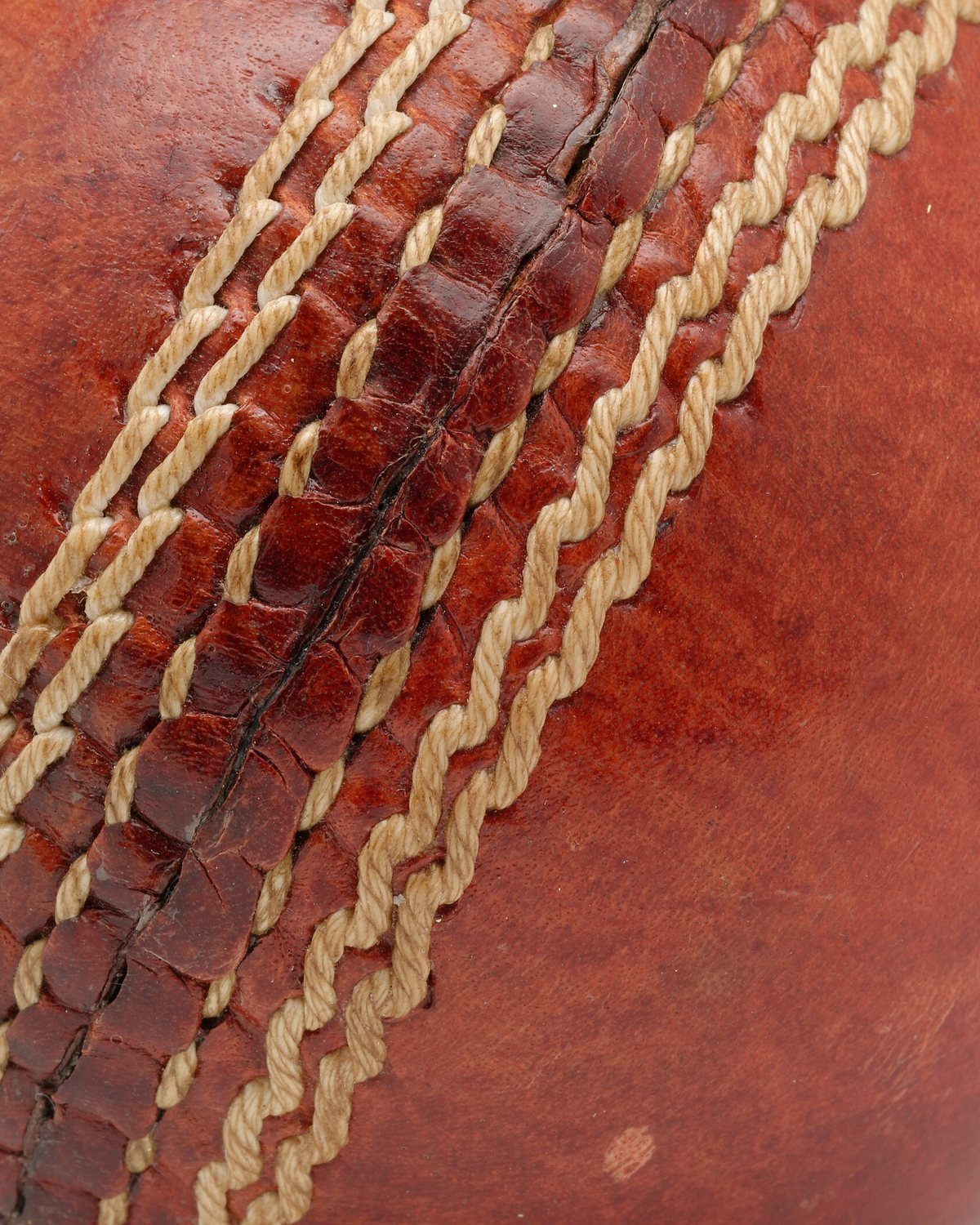
 The key is the seam of the ball.
The ball bends because the seam makes the layer of air leave the ball at different points on its two sides, which creates a pressure difference. The direction of the swing also changes with the angle of the seam and with the ball's speed and wear.
The air layer leaves at different points
A thin layer of air called the "boundary layer" forms on the surface of a ball in flight. This layer cannot stay attached all the way around to the back of the ball, and it leaves the surface at some point. The later it leaves, the lower the pressure on that side. If the pressure differs between the two sides, a sideways force acts on the ball and it bends.
Angling the seam to make it swing
The layer of air can be in two states: a smooth, steady flow or a turbulent flow. A turbulent layer stays attached to the ball's surface for longer. This is where the seam helps. When the ball is bowled with the seam angled, the layer on the seam side becomes turbulent and leaves the ball later. The layer on the other, smooth side leaves early. Because of this difference, the ball swings toward the direction the seam is pointing. This is the conventional swing, often seen with a new ball.

Reverse swing bends the other way
However, with a very fast ball or an old ball with a rough surface, the ball can swing the opposite way. This is called "reverse swing." When the ball is fast, the layer of air becomes turbulent before it reaches the seam, and the seam actually makes the layer thicker and weaker. Then the seam side leaves earlier, and the direction of the swing is reversed. A rough surface lowers the speed needed, so it often happens with an old ball.
A weight imbalance is not the reason
You often hear the explanation that "a ball swings because one side is wet and heavier," but Mehta, a NASA scientist who has studied the aerodynamics of cricket, says this has no scientific basis at all. Research at the University of Cambridge and elsewhere also says that the movement seen in professional matches cannot be explained by earlier theories alone, and it has examined how the seam acts something like a generator of small vortices. How swing works is still being studied today.
Want to know more?
- A ball is said to swing well when it is bowled so that it spins backward along the seam.
- Reverse swing bends about as much as conventional swing. In both, the movement gets bigger in the later part of the flight.
- Conventional swing stops working above a certain speed, and if the ball is faster still, reverse swing can occur.

Quick quiz: test yourself
What mainly makes the ball bend?
Show the answer
- A weight imbalance inside
- Differing airflow caused by the seam
- The colour of the ball
Differing airflow caused by the seam With a seam, the layer of air leaves the two sides of the ball at different points, creating a pressure difference that bends the ball sideways.
With a seam, the layer of air leaves the two sides of the ball at different points, creating a pressure difference that bends the ball sideways.
Next quiz ›Sources
- The truth about conventional, reverse and contrast swing (Rabindra Mehta)ESPNcricinfo
- Flow visualization experiments demonstrating the reverse swing of a cricket ballUniversity of Bath (research portal)
- A review and reassessment of the aerodynamics of cricket ball swingUniversity of Cambridge (Apollo repository)
This article was written after checking the sources above as of 2026-10-03. Explanations may change as research progresses. Photo credits are shown below each photo.