How is a rain-shortened cricket match decided?

 First, let me give you the answer in 30 seconds.
When rain shortens a match, the target for the team batting second is reset with the Duckworth-Lewis-Stern (DLS) method. It works out each team's "scoring resources" from the overs left and the wickets lost, and puts both sides on equal terms.
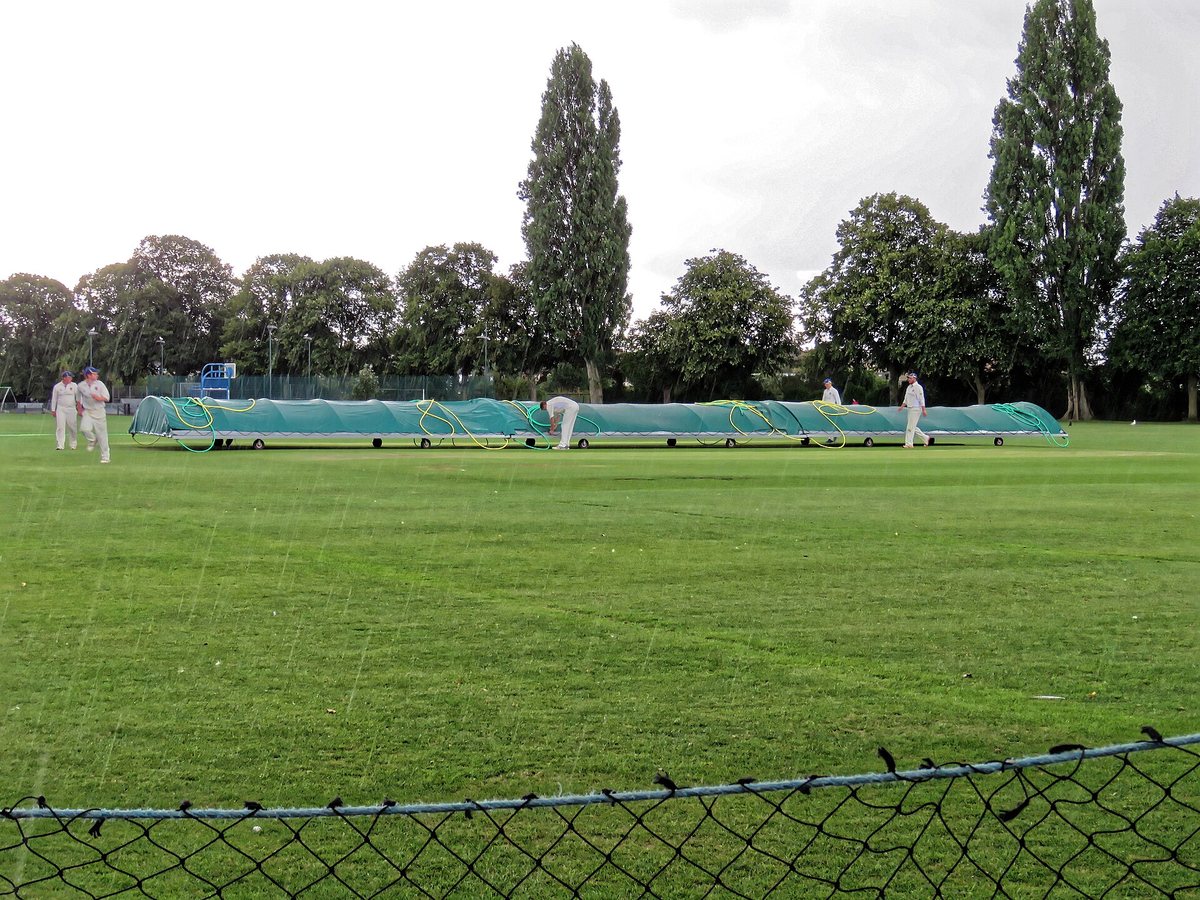
Overs lost to rain
In cricket, the team that scores more runs in the set number of overs wins. In a 50-over match, each team has 300 balls to bat and 10 wickets (the number of times a batter can be out). But if rain stops play and the team batting second loses part of its share, keeping the original target would be unfair.
How the target is reset
That is where the Duckworth-Lewis-Stern method, or DLS, comes in. According to the England and Wales Cricket Board, it resets the target in proportion to the "run-scoring resources" each team has. The resources depend on a combination of the overs left and the wickets lost. A full 50-over innings counts as 100%, and a table lists the resources for every stage of a match.

The more wickets in hand, the more is lost
The method does not simply divide by the number of overs. ESPNcricinfo explains that losing overs late in an innings usually hurts more than losing them early. And a team that is only 2 wickets down loses more from an interruption than a team that is 6 down after 20 overs, because it could have scored more in the remaining overs.
How it began
The ICC says the method grew out of the 1992 World Cup semi-final. After a short rain delay, South Africa went from needing 22 runs off 13 balls to needing the same 22 runs off one ball. To fix this unfairness, the English statisticians Frank Duckworth and Tony Lewis devised a method, and on 1 January 1997 it was used for the first time in an ICC-sanctioned match, Zimbabwe v England in Harare. Later, Stern's name was added, and it became today's DLS method.
Want to know more?
- According to the ICC, after 1997 the method was also used in 1998 in New Zealand, South Africa, Pakistan, India and the West Indies.
- ESPNcricinfo explains that wickets lost after an interruption do not change the target. What matters is how many wickets had been lost when play stopped.
- The England and Wales Cricket Board says the resource table is prepared ball by ball for matches of up to 50 overs.

Quick quiz: test yourself
How is the target set after rain shortens a match?
Show the answer
- By overs and wickets left
- By simply dividing the overs
- By the umpires' discussion
By overs and wickets left The DLS method works out each team's resources from the overs left and the wickets lost, then resets the target.
The DLS method works out each team's resources from the overs left and the wickets lost, then resets the target.
Next quiz ›Sources
- Ten years at the top for Duckworth-LewisInternational Cricket Council (ICC)
- Duckworth/Lewis/Stern Methodology of Re-calculating the Target Score in an Interrupted MatchEngland and Wales Cricket Board (ECB)
- How the Duckworth-Lewis-Stern method worksESPNcricinfo
- ICC Media Information: Duckworth/Lewis calculations explainedInternational Cricket Council (ICC)
This article was written after checking the sources above as of 2026-10-03. Explanations may change as research progresses. Photo credits are shown below each photo.