Why do we hear thunder after we see lightning?

 The answer is the difference in how fast light and sound travel. Let me show you.
The flash and the sound of lightning are made at almost the same moment. We hear the sound later because the two travel at very different speeds. Light goes about 300,000 km in one second, so it reaches our eyes almost instantly, but sound goes only about 340 m in one second, so the farther away the lightning is, the later the sound arrives.
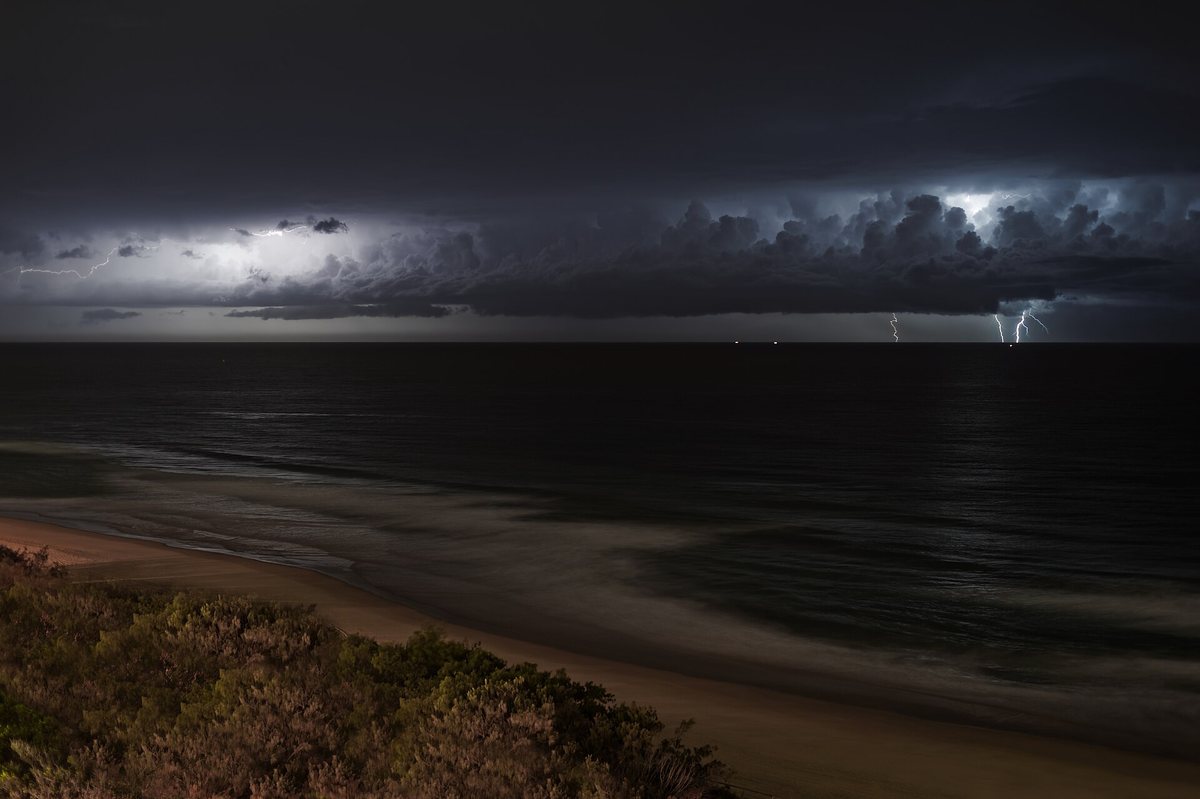
Light and sound are made together
Thunder is made when lightning's electricity passes through the sky and suddenly heats the air along its path. According to the U.S. National Weather Service, the air in the path can become about 5 times hotter than the surface of the sun. The heated air quickly expands, then cools and shrinks right away. This violent movement shakes the air, and that becomes the sound of thunder. So the light and the sound are made at almost the same moment.
Light is about a million times faster
The sound still comes later because the two travel at different speeds. According to the Japan Meteorological Agency, sound travels as a shaking of the air and moves about 340 m in one second. Light moves about 300,000 km in one second, roughly a million times faster than sound. The light reaches our eyes almost instantly, and the sound follows behind. It's the same reason you see a firework burst before you hear the "boom."
Counting seconds tells the distance
If you count the seconds between the flash and the sound, you can tell roughly how far away the lightning is. A guide from the Fukuoka Regional Headquarters of the Japan Meteorological Agency says 3 seconds means about 1 km, 10 seconds about 3 km, and 30 seconds about 10 km. The U.S. National Weather Service also explains how to work out the distance to lightning by counting seconds.
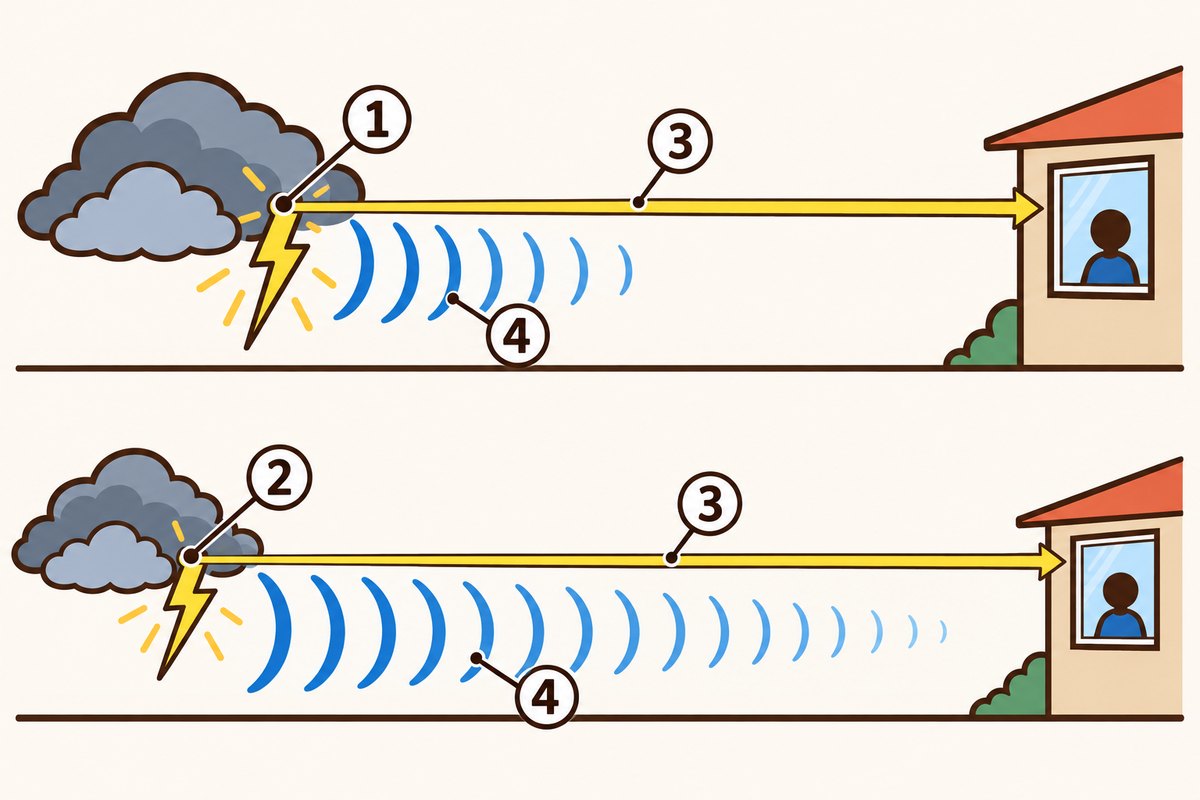
- 1Relatively close lightning
- 2Lightning farther away
- 3Light that arrives almost instantly
- 4Sound waves that arrive later than the light

Why thunder rumbles on and on
Even though lightning hits the ground in just one spot, its path stretches a long way through the sky. Sound from the nearer parts of the path arrives first and sound from the farther parts arrives later, so the thunder seems to go on for a while. According to the National Weather Service, a sharp "crack" means the lightning passed nearby, while a low rumble means it was some distance away.
Hear thunder? Take shelter now
The Japan Meteorological Agency warns that when you hear thunder or see other signs of an approaching thundercloud, a lightning strike may be close at hand, and you should move to a safe place right away. The Fukuoka guide also says that 30 seconds (about 10 km) is a dangerous distance, because the next strike could be very close. Count the seconds only after you are inside a building or a car.
Want to know more?
- According to the U.S. National Weather Service, thunder can be heard only within about 10 miles of the lightning.
- The loud "boom" you sometimes hear is made when the main lightning path reaches the ground.
- Lightning comes from well-developed cumulonimbus clouds. These clouds often bring heavy rain, so it tends to rain when there is thunder.

Quick quiz: test yourself
Remember what you just read? Give it a try!Why do we hear thunder later than we see the flash?
Show the answer
- Sound is made after the light
- Sound travels much slower than light
- Sound bounces back off the clouds
Sound travels much slower than light Light and sound are made at almost the same moment, but light travels about 300,000 km a second and sound only about 340 m, so the sound arrives later.
Light and sound are made at almost the same moment, but light travels about 300,000 km a second and sound only about 340 m, so the sound arrives later.
Next quiz ›Sources
- 雷(かみなり)が光ってから、音が聞こえるまでに差があるのはどうしてなの?気象庁(はれるんランド) (in Japanese)
- はれるん通信 2013年7月16日号(お天気Q&A)福岡管区気象台 (in Japanese)
- Understanding Lightning: ThunderNational Weather Service(NOAA)
- 雷から身を守るには気象庁 (in Japanese)
This article was written after checking the sources above as of 2026-10-03. Explanations may change as research progresses. Photo credits are shown below each photo.
Next fun fact ▶
 NatureWhat causes the special smell of rain?On rainy days, have you ever noticed a soft, earthy smell in the air?

40 surprising animal facts with big photos and short, easy text. A fun-facts book for kids and grown-ups to read together.
See it on Amazon