Why do stars shine?

 A star is a huge ball of gas that makes its own light inside.
The stars in the night sky make their own light, just like the Sun. Gravity squeezes a star's core so hard that it becomes extremely hot and dense, and hydrogen nuclei fuse into helium. This is called nuclear fusion, and the energy it releases spreads out into space as light and heat.
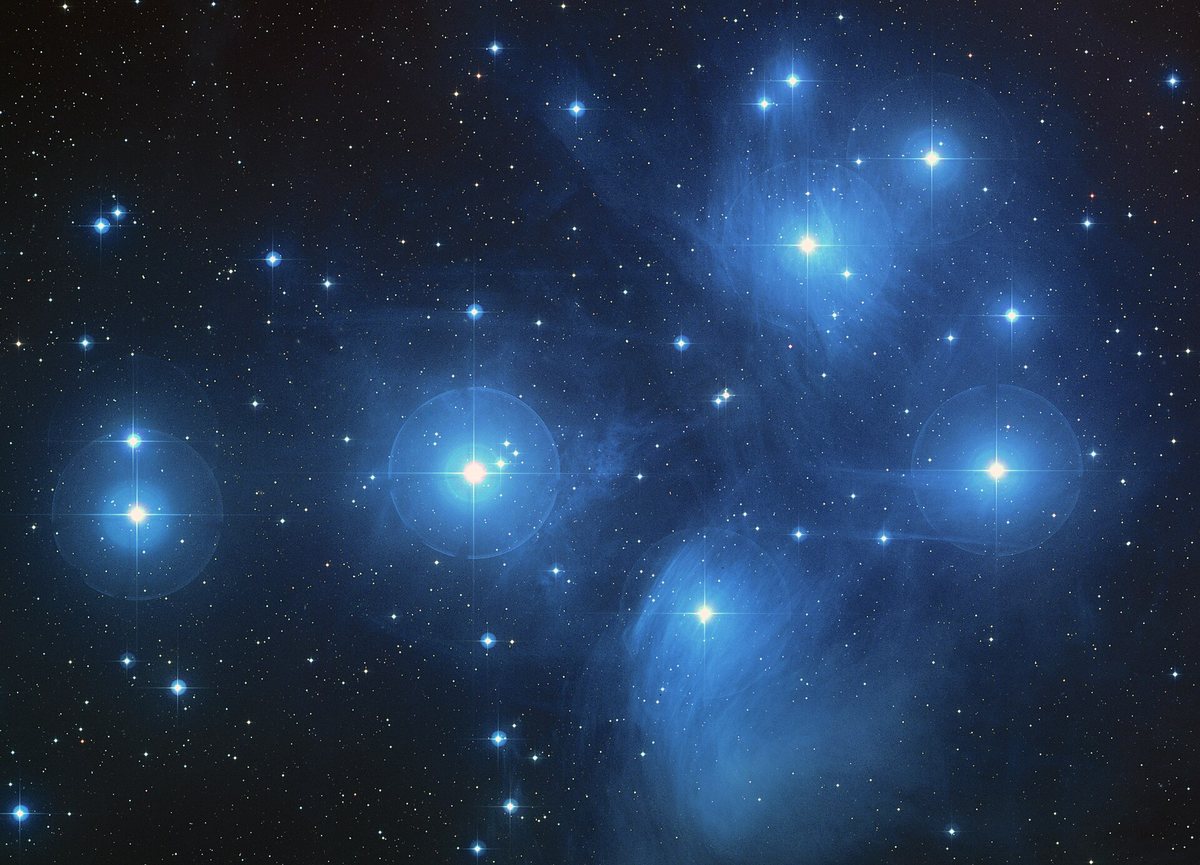
Stars make light, planets reflect it
There are two kinds of things that shine in the night sky. Stars make their own light, but planets and the Moon only look bright because they reflect starlight. Encyclopaedia Britannica explains that planets lack the mass and temperature needed to start nuclear fusion, so they do not glow with their own light. The star closest to us is the Sun.
Gravity squeezes the core
Stars are born in cold clouds of gas and dust floating in space. When gas in a cloud gathers into dense clumps, gravity makes them shrink and heat up, forming baby stars called protostars. According to NASA, after a long time the pressure and temperature in the core become extremely high, and hydrogen nuclei are pressed together and fuse into helium. This is nuclear fusion.
A tug-of-war between gravity and pressure
The energy from fusion heats the star and creates an outward push (pressure). This push balances gravity, which tries to pull the star inward, so the star does not collapse and can keep shining for a very long time. Our article "Why Does the Sun Keep Shining?" gives the detailed numbers for the Sun.
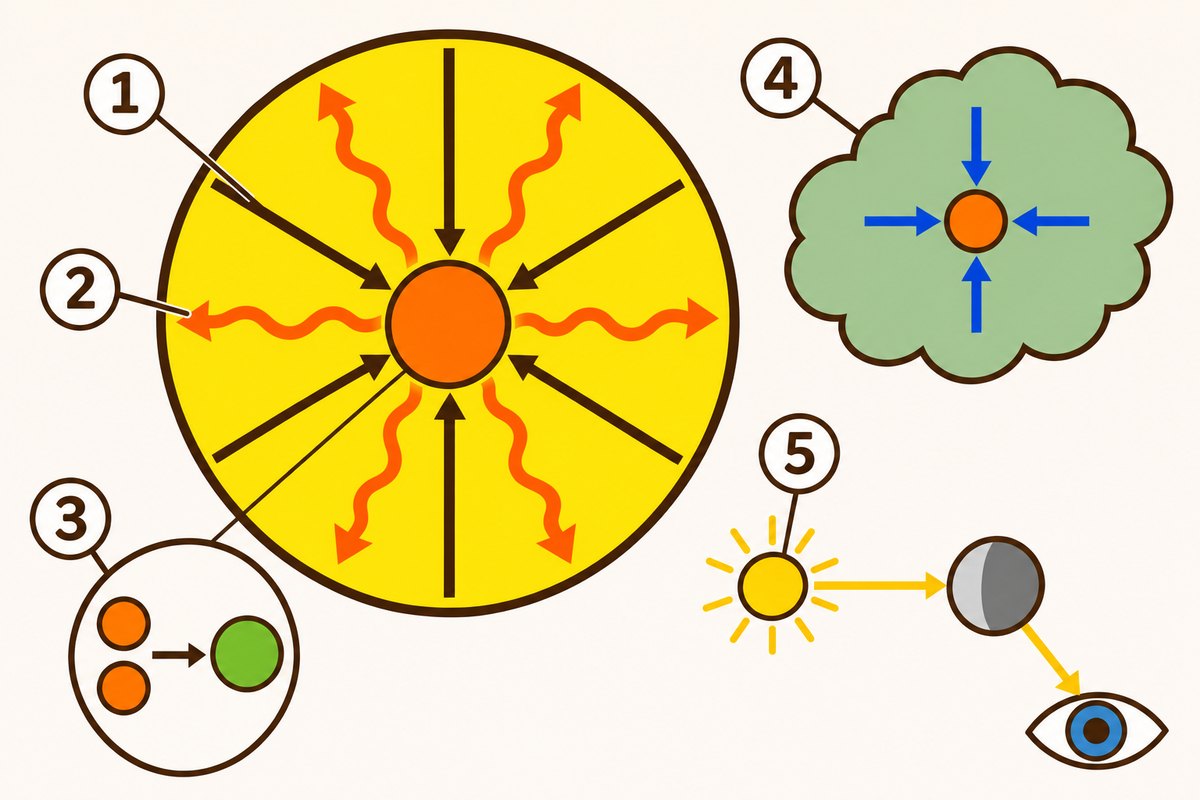
- 1Gravity, which tries to squeeze the star inward
- 2Energy from fusion pushes back outward
- 3Fusion: hydrogen joins to become helium (simplified)
- 4A star is born as a cloud of gas and dust contracts
- 5Planets are seen because they reflect a star's light

What decides a star's color and lifespan?
A star's color depends on the temperature of its surface. According to Scientific American, red stars are on the cooler side, at about 2100–3400 °C, stars in the Sun's class are about 4900–5700 °C, and bluish-white stars are even hotter. Lighter stars are dimmer and cooler and use their fuel slowly, so they shine for a long time, and some are thought to shine for trillions of years. Very heavy stars, on the other hand, shine for only a few million years.
Based on an article in Scientific American.
Want to know more?
- Some of the gas clouds where stars are born (molecular clouds) have 1000 to 10 million times the mass of the Sun.
- The clouds that give birth to stars can stretch across hundreds of light-years.
- According to Scientific American, the surface of the Sun is about 5500 °C.
Quick quiz: test yourself
Remember what you just read? Give it a try!What happens in a star's core that lets it make its own light?
Show the answer
- Something like coal is burning
- Nuclear fusion turns hydrogen into helium
- It reflects sunlight
Nuclear fusion turns hydrogen into helium In the core, squeezed by gravity, hydrogen nuclei fuse into helium, and that energy becomes light and heat.
In the core, squeezed by gravity, hydrogen nuclei fuse into helium, and that energy becomes light and heat.
Next quiz ›Sources
- StarsNASA(アメリカ航空宇宙局)
- What's the Difference Between Planets and Stars?Encyclopaedia Britannica
- The Colors of Stars, ExplainedScientific American
This article was written after checking the sources above as of 2026-10-03. Explanations may change as research progresses. Photo credits are shown below each photo.
Next fun fact ▶
 SpaceHow old is the Earth, and how do we know?How do you think scientists found out Earth's birthday?

40 surprising animal facts with big photos and short, easy text. A fun-facts book for kids and grown-ups to read together.
See it on Amazon