Why do astronauts float on the space station?

 It is not because there is no gravity up there. About 90 percent of Earth's gravity still reaches the station. Astronauts float because the station and everyone inside are falling around Earth together.
Astronauts float on the space station because the station, the crew, and everything inside are all falling around Earth together. About 90 percent of Earth's gravity still reaches the station, but since everything falls at the same rate, they appear to float.
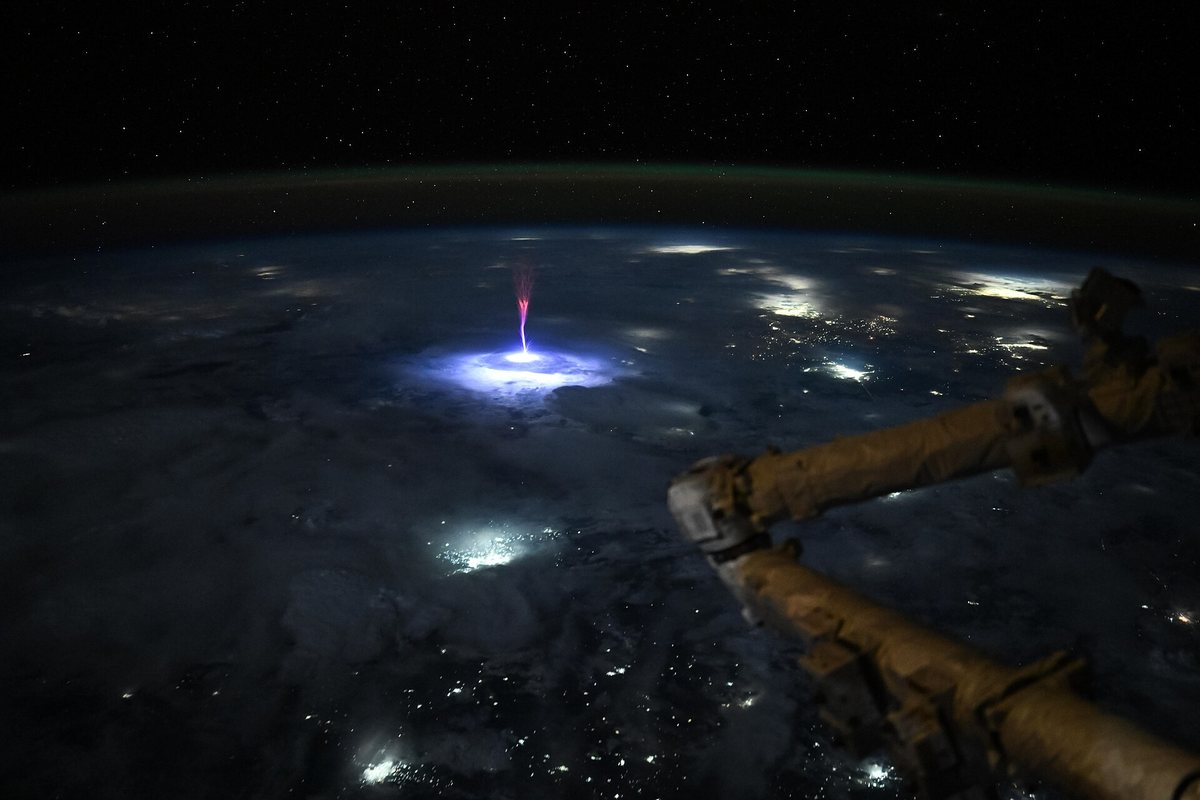
Is there gravity in space?
Earth's gravity is not zero in space. The International Space Station orbits at an altitude of about 200 to 250 miles. At that height, Earth's gravity is still about 90 percent as strong as it is on the surface. A person who weighs 100 pounds on the ground would weigh 90 pounds there.
The reason is free fall
So why do astronauts float? The answer is free fall. In a vacuum, gravity makes all objects fall at the same rate, no matter their mass. On a free-fall ride at an amusement park, if you let go of a ball at the start of the fall, you and the ball fall together, so the ball appears to float in front of you. The same thing happens in a spacecraft: the vehicle, the crew, and all objects aboard are falling together, so compared with the spacecraft, they appear to float.
Falling around Earth
What does it mean to fall around Earth? Earth's gravity pulls the space station downward. But the station is also moving sideways very fast—about 17,500 miles per hour. Because Earth's surface curves, the station's falling path matches the curve of the planet, so it keeps falling but never hits the ground. The moon stays in orbit around Earth for the same reason.

Microgravity and the body
NASA studies microgravity to learn what happens to people and objects in space. In this floating environment, muscles and bones can get weaker. Even though the station is falling around Earth, gravity has not disappeared.
Want to know more?
- In microgravity, astronauts can move equipment weighing hundreds of pounds with just their fingertips.
- The term 'zero gravity' can be misleading because a small amount of gravity is everywhere, NASA explains.
- Gravity gets weaker with distance, but it never completely disappears in space.
Quick quiz: test yourself
Why do astronauts float on the International Space Station?
Show the answer
- Because gravity disappears
- Because they are free-falling around Earth together with the station
- Because their spacesuits become lighter
Because they are free-falling around Earth together with the station About 90 percent of Earth's gravity still reaches the station. Astronauts float because they, the station, and everything inside are all falling around Earth together.
About 90 percent of Earth's gravity still reaches the station. Astronauts float because they, the station, and everything inside are all falling around Earth together.
Next quiz ›Sources
This article was written after checking the sources above as of 2026-10-03. Explanations may change as research progresses. Photo credits are shown below each photo.