Why Can Airplanes Fly When They Are So Heavy?

 The answer is that its wings turn the flow of air and receive an upward force. It also needs to keep moving forward.
An airplane can fly because its wings turn the flow of air. The reaction to that turning pushes the wings upward with a force called lift. The engines provide thrust so the airplane keeps moving forward, and lift, weight, thrust, and drag all work together.
The four forces
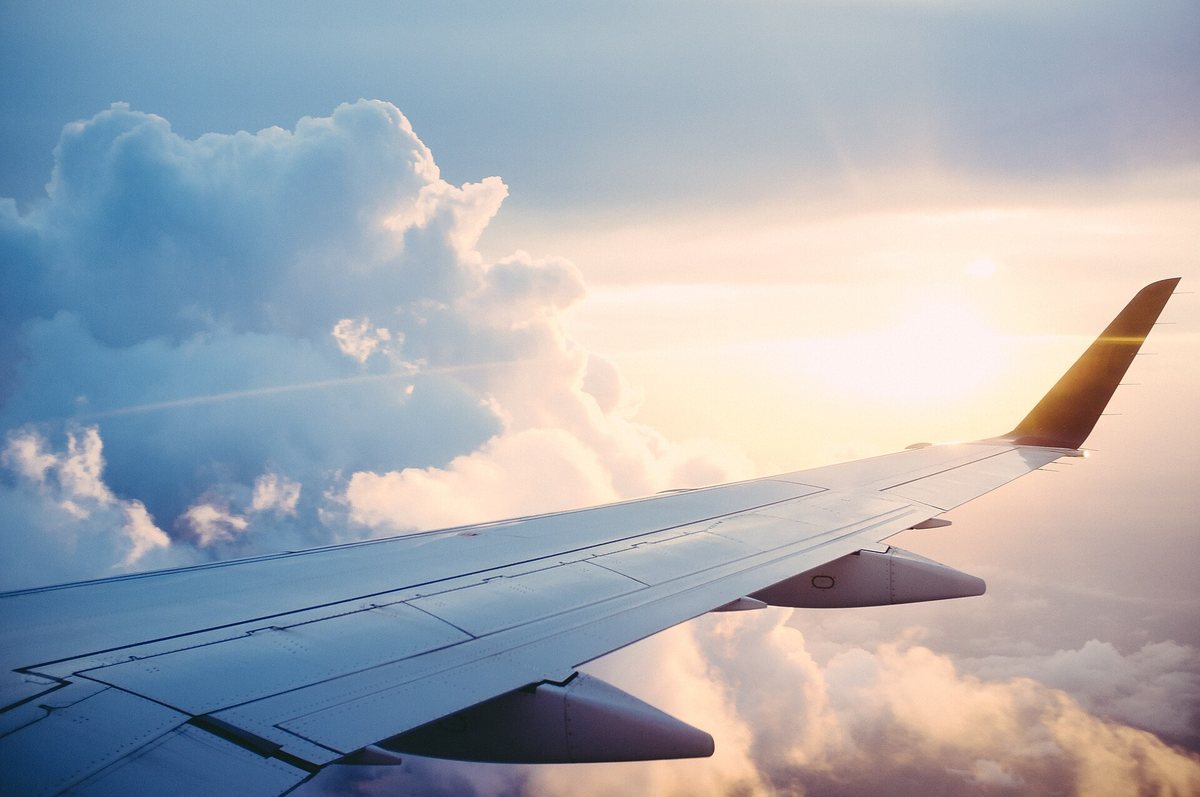
Four main forces act on an airplane in flight: lift, weight, thrust, and drag. Lift pushes upward. Weight pulls the airplane toward the center of the Earth. Thrust moves it forward, and drag resists that forward motion. NASA explains that the strength and direction of these forces decide how the airplane moves.
Wings turn the air
Most of the lift comes from the wings. NASA explains that lift is created when a moving flow of air is turned by a solid surface. The wing turns the flow and pushes the air in one direction. By Newton's third law, the wing feels a force in the opposite direction. That force is lift, and it acts at right angles to the flow. Both the upper and lower surfaces of the wing help turn the air.

Forward motion is needed
For lift, there must be motion between the wing and the air. NASA puts it simply: no fluid, no lift; no motion, no lift. An airplane standing still does not have air flowing over its wings in the needed way. The engines produce thrust to overcome drag and move the airplane forward. That forward speed lets the wings meet the air and create upward lift.
Engines and wings
The engines do not lift the airplane directly. NASA notes that the engine's job is to overcome drag, not to lift the airplane; the wings do the lifting. NASA gives the example of a 1-million-pound airliner with four engines that produce a total of 200,000 pounds of thrust. Even then, the wings are the main source of lift. Gliders have no engines at all, but they can fly once an outside force starts them moving. Weight also changes as fuel is used, so pilots keep adjusting the balance.
Want to know more?
- When the forces balance, the airplane cruises at a constant velocity. When they do not balance, it accelerates in the direction of the stronger force.
- The amount of thrust depends on the type and number of engines and the throttle setting. Some aircraft can even change the direction of thrust.
- During reentry and landing, the Space Shuttle flies as a glider. Its rocket engines are used only to lift it into space.
Quick quiz: test yourself
What is the main thing that lifts an airplane?
Show the answer
- The thrust from its engines
- The lift created by its wings
- Drag
The lift created by its wings NASA explains that the engines mainly overcome drag, while the wings do the lifting. The wings create lift by turning the flow of air.
NASA explains that the engines mainly overcome drag, while the wings do the lifting. The wings create lift by turning the flow of air.
Next quiz ›Sources
- Four Forces on an AirplaneNASA Glenn Research Center
- What is Lift?NASA Glenn Research Center
- Forces of FlightSmithsonian National Air and Space Museum
This article was written after checking the sources above as of 2026-10-03. Explanations may change as research progresses. Photo credits are shown below each photo.